Peter Altmiks |
Peter Altmiks is Senior Research Fellow at the Liberal Institute of the Friedrich Naumann Foundation in Berlin and is currently working on the poverty debate in Germany, the effects of banking regulation, and the origins of the financial crisis. He has criticised the relative poverty concept as well as the basic income one and is an advocate of the negative income tax. He published “In the shadow of financial crisis – should the public central banking system be abolished?” (2010), “The optimal currency for Europe? Boon and bane of the Euro” (2011), “Another chance for social market economy? Comeback of ordoliberalism and liability” (2012), and “Market organisation of the financial system – banking regulation, rating agencies, and risk management (2013).
|
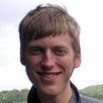
Vincent Caron
|
Vincent Caron is Policy Offi cer for Structural Funds, Services, Discrimination, Poverty and Fundamental Rights at the European Anti-Poverty Network. His research interests are related to the EU’s Structural Funds, discrimination and poverty alleviation policies and fundamental rights.
|
Nicolas Duvoux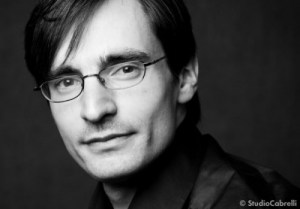 |
Nicolas Duvoux is an assistant professor at the University Paris Descartes (Sorbonne Paris Cité), and a member of the Centre de Recherche sur les Liens Sociaux (Paris Descartes / CNRS). He is also an editor of Booksandideas.net. He studies welfare-to-work policies and the emphasis on personal responsibility that is occurring in both the European and American contexts. He is particularly interested in how welfare recipients respond to the stigma related to their status. Last fall, Nicolas Duvoux was a visiting scholar at the Harvard Department of Sociology. He has published several peer reviewed articles and two books : Le Nouvel Age de la solidarité: Pauvreté, précarité et politiques publiques (La République des idées/Seuil, 2012) and L’autonomie des assistés: Sociologie des politiques d’insertion, (PUF, 2009). He recently edited with Jane Jenson, a special edition of Lien social et politiques, “Services publics à la carte” (UQAM, 2011).
|
| Gilda Farrell |
Gilda Farrell is Head of Division at the Social Cohesion Research and Early Warning Division in the Social Policy Department of the Council of Europe. Having a Masters Degree in Multidisciplinary Studies (Economics and Political Science) and a PhD in Economics, Gilda Farrell is currently working on developing conceptual and methodological instruments for the promotion of social cohesion, negotiating with the governments through the European Committee for Social Cohesion, coordinating and assisting the development of partnerships for the fight against poverty in countries from the Southern Caucasus region and Russia, organizing debates on social cohesion issues.
|
Ulf Matysiak |
Ulf Matysiak is CEO of Teach First Germany and is currently responsible for aspects such as organization and staff formation, higher education marketing, selection of applicants and training. Teach First aims to promote equality of opportunity for all students. The organization trains and supports people with leadership potential to become teachers in schools from low income communities. Ulf Maysiak has previously worked as a trainer at the International House Berlin and as a street worker in Freiburg.
|
Chris Mould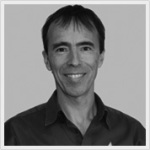 |
Chris Mould is “indisputably one of the UK’s top social entrepreneurs” (The Guardian). He is Executive Chairman at the Trussel Trust, an organisation which sets out to combat poverty and exclusion in the UK and Bulgaria. Among other activities, the Trussell Trust partners with churches and communities to open food banks. Chris Mould will offer us a practitioner’s view on the topic and a perspective on the role of social entrepreneurship in poverty alleviation.
|
Chris de Neubourg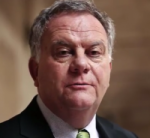 |
Chris De Neubourg has worked with the World Bank, the European Commission and the ILO and he has been a visiting scholar with the European University Institute in Fiesole, near Florence. He was academic director and founder of the Maastricht Graduate School of Governance and is a specialist on the empirical analysis of social protection systems, with researches and publications on subjects including labour and social economics and public finance. De Neubourg is currently the Chief of Social & Economic Policy at UNICEF’s Innocenti Research Center (Florence, Italy), which was established in 1988 to strengthen the research capability of the United Nations Children’s Fund and to support its advocacy for children worldwide. The centre aims at improving international understanding of issues relating to children’s rights, promoting economic policies that advance the cause of children, and helping facilitate the full implementation of the United Nations Convention on the Rights of the Child in industrialized and developing countries.
|
Philippe Jurgensen |
Philippe Jurgensen is an a graduate of Sciences-Po and the National School of Administration (ENA). He began his career 1969 as Inspector of Finance. During his career he held leading positions in the public service, including Director of External Economic Relations (DREE) at the Ministry of Economics and Finance, Director General of the French Development Fund, as well as in the private sector. He is also professor (general economics) at Sciences-Po in Paris and has published on political economy, the Euro and development economics. Philippe Jurgensen has been awarded the Legion of Honor (Offi cer) and the National Order of Merit (Commander).
|
| Dominic Richardson |
Dominic Richardson is administrator in Child and Family Policies at the OECD Social Policy Division since 2007. Prior to the OECD, he has been a Research Fellow within the Social Policy Research Unit at the University of York. He is co-author of several OECD reports; in 2009 the report “Doing Better for Children” was published, which reviews the range of policies designed to improve child well-being in OECD countries, and a range of associated child well-being outcomes. Subsequently, in 2011 he prepared, together with a team of analysts, the report “Doing better for Families”, which looks at how family policy is developing the changing family context and considers the different ways in which governments in OECD countries support families.
|
Stefan Selke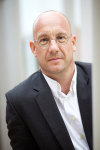 |
Stefan Selke is Professor for Social Change at Hochschule Furtwangen, Germany, and was until recently visiting professor at the University of Vienna. He is the main critic of the German Tafel movement (food banks). He has conducted on-the-field research about the Tafel movement and is sceptical about their social sustainability – according to Selke, they merely alleviate poverty, but do not help the poor to find a way out of poverty.
|
Philippe Van Parijs
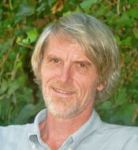 |
Philippe Van Parijs directs the Hoover Chair of Economic and Social Ethics at the University of Louvain, Belgium. He holds a doctorate in philosophy from the University of Oxford and a doctorate in the social sciences from the University of Louvain. He was a Visiting Professor at Harvard University from 2004 to 2011 and is now a Visiting Professor at the Universities of Oxford and Leuven. He is one of the founders of the Basic Income Earth Network and chairs its International Board. His books include Evolutionary Explanation in the Social Sciences, Marxism Recycled, Real Freedom for All, L’Allocation universelle; Das bedingungslose Grundeinkommen, Just Democracy. The Rawls-Machiavelli Programme (Colchester: ECPR, 2011) and Linguistic Justice for Europe and for the World (Oxford UP, 2011; Sprachengerechtigkeit für Europa und die Welt, Suhrkamp, 2013, forthcoming).
|